Freddie’s story: retinoblastoma
, 5 minute read
From diagnosis to life-changing treatment
Freddie is one of the babies taking part in the Generation Study. Shortly after being born, he was diagnosed with hereditary retinoblastoma, caused by a change in his RB1 gene. Retinoblastoma is a rare type of eye cancer that can affect young children. It can usually be treated successfully if it's found early, with treatment aiming to get rid of the cancer.
The journey
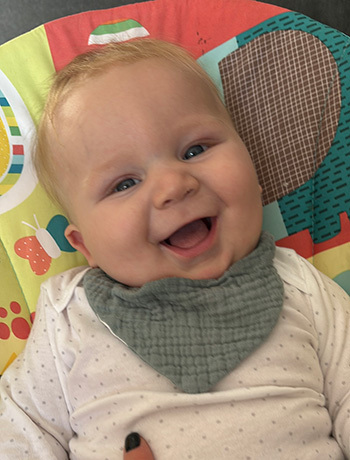
Freddie was born at the Jessop Wing at Sheffield Teaching Hospitals NHS Foundation Trust in April 2025. His parents Vicky and Joey had signed up to Generation Study while Vicky was pregnant.
When Freddie was born, there were no signs that anything was wrong. His mother Vicky Underhay remembers: “He was a normal little baby. He had passed all his eye tests in hospital. So when we got his results back four weeks later, it came totally out of the blue. As you can imagine we were very upset.”
Freddie’s results showed that he had hereditary retinoblastoma caused by a change in his RB1 gene — meaning a rare and aggressive form of eye cancer. Initially he was diagnosed with two tumours in his left eye and one in his right.
His father Joey Underhay says: “It was such a difficult time for us as a family. But we were fortunate having been a part of the Generation Study because Freddie was not only diagnosed incredibly quickly, but he was able to start treatment almost immediately.”
Freddie was referred to Birmingham Children's Hospital, which is one of two specialist centres that treat retinoblastoma in the UK. He has undergone a mix of chemotherapy and laser treatment to treat the tumours in his eyes.
While treatment is in its early stages, the early signs are promising. Vicky says:
“Taking part in the study has changed the outlook for Freddie’s vision, which the doctors are quite hopeful of saving. If we hadn’t joined the study, the cancer wouldn’t have been picked up so early and Freddie could very well have lost all his sight.”
Vicky Underhay, Freddie’s mother
Going forward
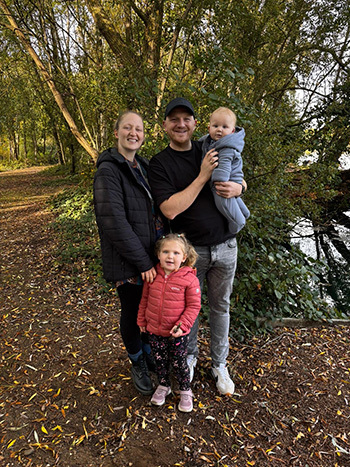
Due to the nature of retinoblastoma and the genetic change involved, Freddie will need ongoing treatment, monitoring, and specialist care for the foreseeable future. This is to ensure any further tumour growth is detected and treated as early as possible as his eyes continue developing. Freddie will also be having eye screenings up until the age of 16 in Birmingham.
However, Joey and Vicky are keen to emphasise that joining the study was the right decision for them.
Joey Underhay says: “Our decision to join the Generation Study has changed Freddie’s life phenomenally. We were told that the first 6 months is vital in diagnosing and treating the condition. There’s no telling at what point it would have been discovered if we hadn’t taken part and what might have happened.
“The care that Freddie has received, and us as parents as well, has been second to none. We can’t thank everyone enough for all that they’re doing for Freddie.”
Joey Underhay, Freddie’s father
Vicky Underhay adds: “When you sign up to research like this, you think it will never be you. But if we had thought ‘ignorance is bliss’ then the cancer would have spread down his optic nerve and into his body. We’re hopeful that this kind of testing will be readily available to any parent who wants it for their child in the future.”
Learn more about how we chose the conditions we test for.