
Revan's story: Gene change associated with adrenoleukodystrophy (ALD)
, 4 minute read
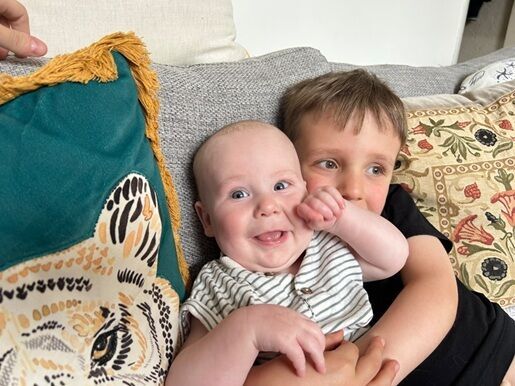
Revan is under one year old and from Bradford. He is one of the babies taking part in the Generation Study and was found to have a genetic change associated with adrenoleukodystrophy after birth, which helped diagnose the same change in his older brother.
Joining the study
Jessica and Dominic Barker‑Roe live in West Yorkshire with their two sons. Jessica joined the Generation Study during her pregnancy while she was in hospital, without expecting it would have any direct impact on her family.
Jessica was admitted to hospital at 31 weeks pregnant and spent several weeks on the maternity ward in Bradford. During that time, a research midwife told her about the Generation Study and asked whether she would like to take part.
“I just liked the idea that we were helping this research. I work in the NHS, so I thought I might as well participate. I didn’t really think about the impacts on us.”
Jessica, Revan’s mother
Because Jessica gave birth by emergency caesarean section at 35 weeks, the usual cord blood sample wasn’t collected at delivery. Instead, a heel‑prick sample was collected a few weeks later, something the family describes as straightforward.
“It was really easy,” Jessica explains. “We just went to the maternity unit and they did a quick test and then we went and got a coffee.”
Like most families, Jessica and Dominic expected they would not hear anything else. They were therefore surprised when they later received a call from Dr Lydia Green, paediatric neurologist, explaining that something had been identified through the Generation Study and further tests were needed.
“We assumed probably nothing would happen to us. You never expect to actually get the phone call.”
Jessica, Revan’s mother
Understanding the result
Their son, Revan, was found to have a gene change associated with ALD, a rare genetic condition with a variety of different forms. Some versions of the condition can cause children to develop a progressive and life-limiting disorder. Less severe, adult-onset versions of the condition can result in muscular stiffness and weakness, starting in a person’s twenties or thirties.
While having a genetic change does not mean a child will definitely develop symptoms, early identification allows doctors to monitor children closely and intervene if needed.
“He has the gene change, but it doesn’t necessarily turn into anything,” Jessica explains. “He has the potential to become extremely poorly, but he’s not right now.”
The diagnosis also prompted genetic testing for the couple’s older son, Thorin, who was three years old at the time and had been born before the Generation Study began. This testing found that he also carries the gene change associated with ALD.
“They tested him very quickly,” Jessica says. “He was at the point where he could develop things.”
Both children are now receiving regular blood tests, and from the age of two, MRI scans, allowing changes to be picked up early, allowing doctors to spot any early changes – well before symptoms would appear.
“If they catch it before it starts developing, it’s not life limiting. That’s the thing for us.”
Jessica, Revan’s mother
Why early diagnosis matters
For Jessica and Dominic, the value of taking part in the study lies in having clear information and a plan for the future.
“The only way you can possibly find out later down the line is when your child becomes ill,” Jessica says, at which point in some circumstances, treatment can be too late to prevent the worst symptoms
Without the Generation Study, neither of their children would have been tested until symptoms appeared, which could have delayed diagnosis and treatment.
“If we’d never enrolled in the study, Thorin could have potentially got ill to the point that we can’t treat him,” Jessica explains.
Knowing about the condition early has allowed the family to continue daily life with reassurance that any changes will be monitored carefully. Rather than waiting for unexplained symptoms, the family now has a clear plan in place, with ongoing monitoring and treatment options available if needed.
Following testing, Jessica also now knows that she carries the same genetic change for ALD and may experience some issues in later life. The condition doesn’t typically impact women as severely as it does men, but Jessica could still experience muscular issues in future.
“I'm definitely grateful to know that in the future if I experience certain symptoms it will be easier to diagnose,” she adds.
Sharing their experience
Since receiving their results, Jessica and Dominic have spoken openly about their experience with people they know and encouraged other expectant parents to learn about the study.
“Since we found out, we’ve been telling everybody we know,” Jessica says.
She highlights how simple participation was for their family.
“It’s probably one of the least invasive things you could actually have done,” she says.
Looking back, Jessica feels grateful that she had the opportunity to take part at the time she did, even if she did not fully realise its potential significance at the outset.
“We feel incredibly lucky to know,” she says. “We would never have known otherwise.”
Learn more about how we chose the conditions we test for.